
Running Assessment & Gait Analysis in Melbourne

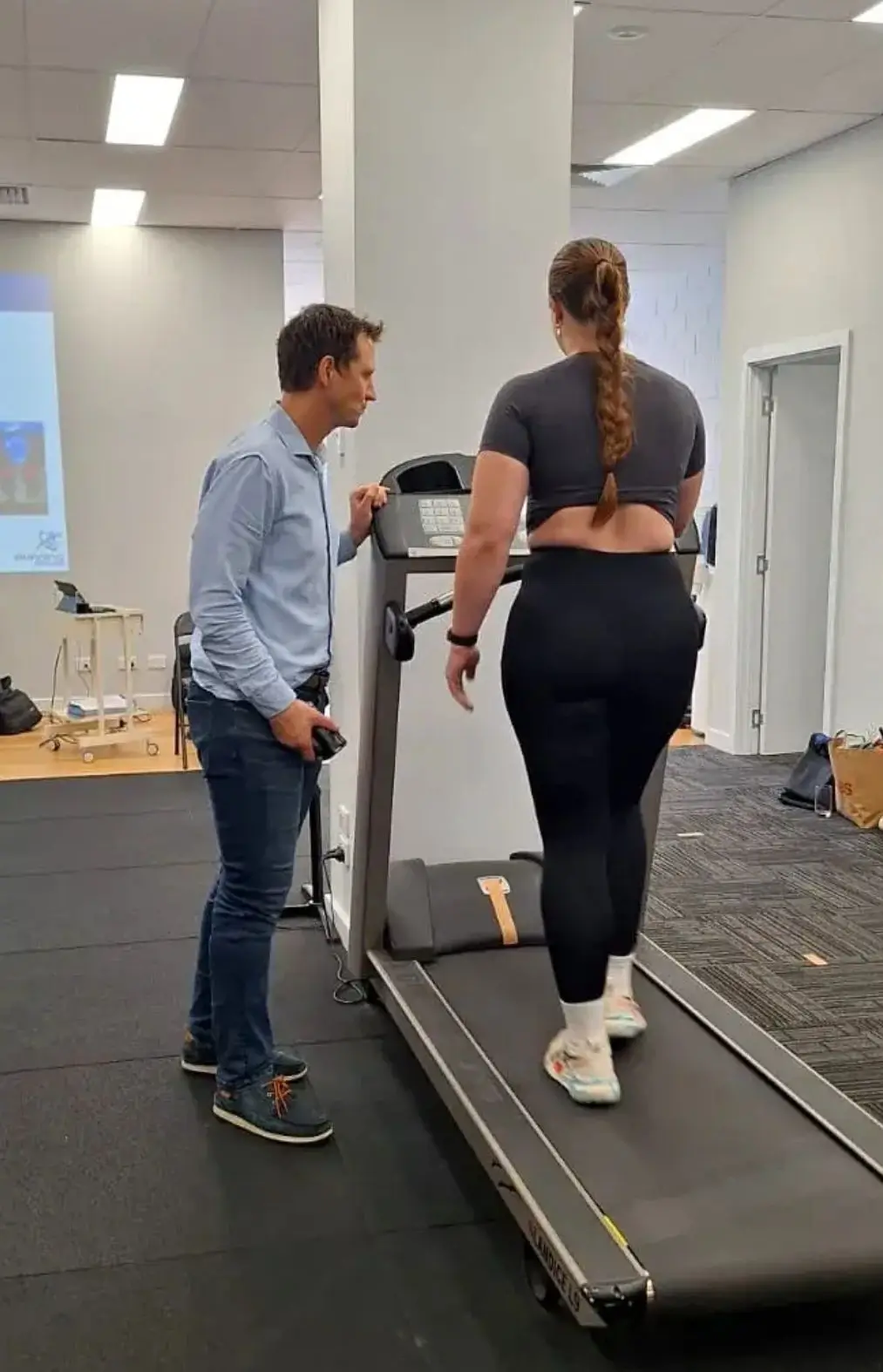
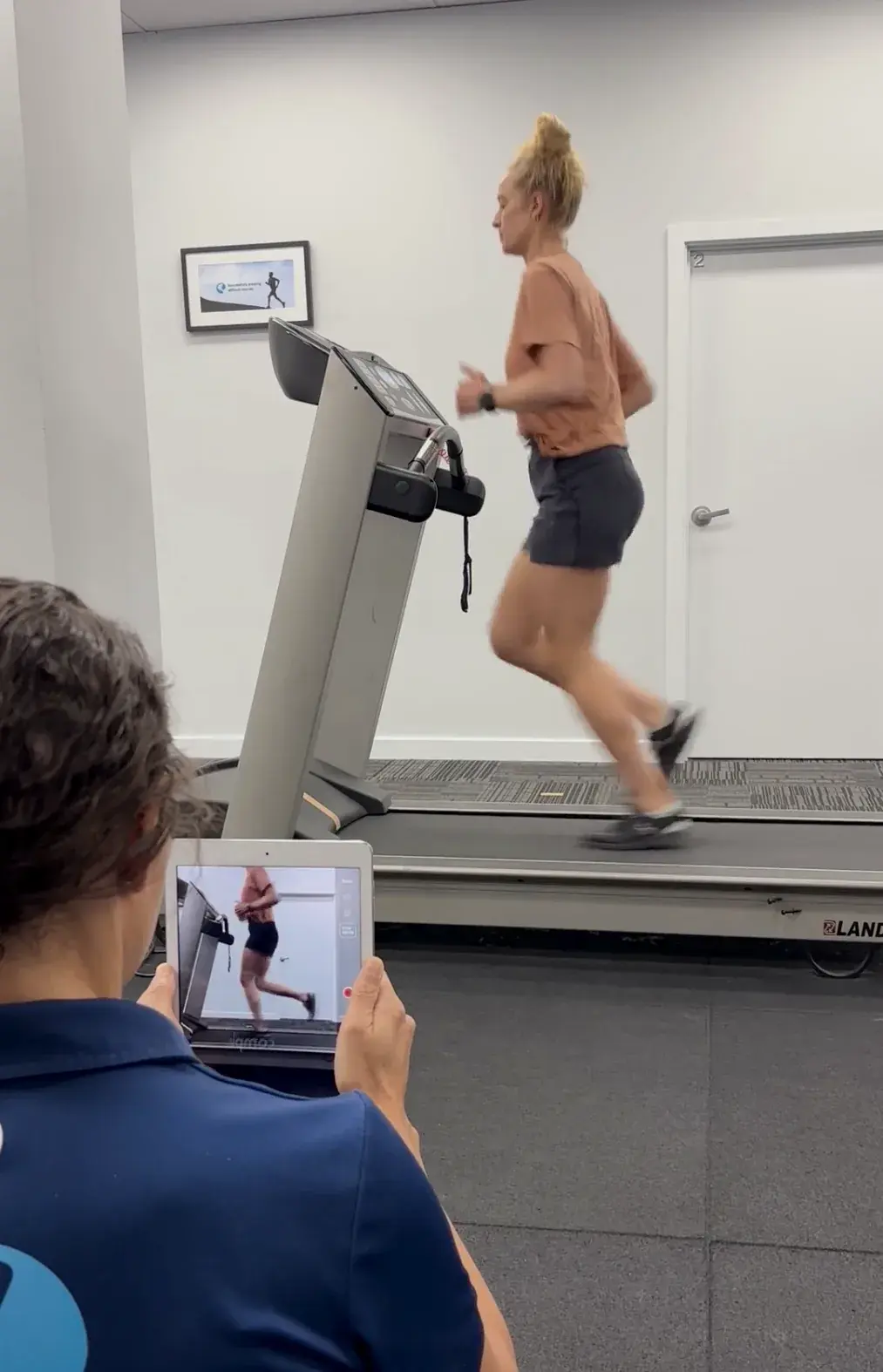
Prof Christian Barton assessing a runner's technique on a treadmill at Complete Physio Richmond
A PLAN BUILT FOR YOU

No two runners are the same

No two runners are the same, and neither are their running problems. A running assessment is a session spent working out exactly what is going on with yours: how your body is coping with your training, where your strength and movement may be limiting you, and how your technique holds up when you run.

Our Richmond team pairs world-class clinical expertise with video gait analysis to give you a clear picture of your running and a plan built around you.

What is a running assessment?

Running is a skill. We learn it from a young age, but much like golf or tennis, running skill varies from person to person and can be improved with coaching and training. A number of factors come into how well, and how comfortably, you run, including your technique, your strength and your flexibility.

A running assessment is a thorough biomechanical assessment of you as a runner. We screen your muscle capacity, joint mobility and running technique, complete a video analysis of your running, and identify the areas that may be limiting you or contributing to injury. It can benefit anyone from sporadic runners to high performing athletes, and we use it both to manage injury and to help you reach and exceed your personal best.

If you are in pain right now, our running injury physiotherapy page explains how we diagnose and treat running injuries.

Video gait analysis of a runner on a treadmill, filmed on a tablet by a physiotherapist at Complete Physio Richmond

Who is it for?

You do not need to be injured to benefit from a running assessment. The runners who book one typically fall into a few groups

  • Runners managing a recurring injury who want to understand why it keeps returning
  • People returning to running after time off, pregnancy or injury
  • Newer runners who want to build sensibly from the start
  • Experienced runners working towards a personal best or preparing for an event
  • Runners who want to better understand their technique and training
INITIAL ASSESSMENT

What your running assessment involves (60 minutes)

The initial assessment takes a full hour. A typical session includes:

Your running history

We discuss your background, current training, footwear and goals.

A strength and movement screen

We assess the strength, capacity and mobility that determine how well you run and how much training your body can tolerate.

Video gait analysis

We film your running, on the treadmill or overground, and review it with you, explaining what you do well and potential areas for improvement.

Priorities

We identify the changes that will make the biggest difference, whether to your training, your strength or your running technique.

Your plan

You leave with a tailored program, including strength work and any running cues that apply to you.

Filming is a standard part of every assessment. Reviewing your own running in slow motion, with a clinician talking you through it, is often where the assessment becomes clearest.

Our approach is evidence-based

Our running work is built on research, much of it published by our own team (we have published more than 50 papers about running-related injuries). Two principles guide what we do.

The key is identifying which change suits you, and being guided through it properly rather than guessing.

VIDEO ANALYSIS

What we look at when you run

When we review your running on video, we typically assess:

Your step rate, and whether you are overstriding (reaching too far in front)

How and where your foot strikes the ground, and how heavily

Control through your hips and pelvis

Your trunk position and movement, and arm swing

Movement through your foot and ankle

For many runners, a modest increase in step rate is one of the simplest and most effective changes, because it brings your landing closer to your centre of mass and reduces load through the joints. What is right for you is exactly what the assessment is designed to answer. You can read more in our blog on cadence and running technique.

RESULTS

Before and after running retraining

These images show one runner before their assessment, and the same runner after a period of strength work and running retraining.

Before and after a period of strength work and running retraining.

OUR PHYSIOTHERAPISTS WITH A SPECIAL INTEREST IN RUNNING

Who you will see

You will be seen by an experienced running physiotherapist, part of a team with genuine world-class expertise in running. Between them they bring international research, extensive clinical experience and a strong commitment to helping runners at every level.

B.Physio (Hons), PhD, professor Physio (La Trobe)

Director, Physiotherapist
Special Interests: Osteoarthritis, Tendinopathy, Knee, Running

B.Physio, Masters Research

Director, Physiotherapist
Special Interests: Knee, Osteoarthritis, Tendinopathy, Low Back Pain

B.Physio, B. Health Science, M Sports Physio

Physiotherapist
Special Interests: Hip and Knee, Pilates, Strength and Conditioning

B.Physio, M Sports Physio, M Musculoskeletal Physio, PGCERT (Pelvic Floor Health)

Physiotherapist
Special interests: Shoulder, Spine, Sports Injuries

B. Physio (Hons)

Physiotherapist
Special interests: Runners, Gymnasts, Circus Artists, Shoulder Injuries

B.Physio, M Sports Physio

Physiotherapist
Special interests: Cycling, Triathlon, Pilates, Foot and Ankle

Ready to get started?

Initial Running Assessment. 60 minutes, at 656 Bridge Rd, Richmond. The cost may vary depending on which clinician you see. Book online for current pricing or call (03) 9882 2020. Private health rebates may apply with extras cover, and eligible patients may be able to access care under a Medicare plan. Follow-up by telehealth is available for country and interstate runners.

Frequently Asked Questions

No. Many of the runners we assess have no injury at all. Some want to run more comfortably, some are returning after a break, and some are working towards a personal best. The assessment is as useful for improving healthy running as it is for addressing a problem.

An initial running assessment runs for a full hour. The cost may vary depending on which clinician you see. For an outline of the costs for each clinician, visit our booking page, or call us on (03) 9882 2020.

Wear comfortable running gear and bring the shoes you usually run in. If you rotate between several pairs, bring them all. It also helps to know your recent training, so bring your run log or watch data if you use one.

Yes. We film your running, on the treadmill or overground, and review it with you during the session. Seeing your own running is one of the most valuable parts of the assessment.

We will only guide changes to your running technique where there is a genuine reason to, and always with guidance. The evidence does not support changing technique simply to prevent injury, and making changes too early can create new problems. Where a specific change is likely to help, including for conditions like patellofemoral pain, shin splints, bone stress injuries, tendinopathies, and other persistent running-related injuries. Sometimes changing running technique might also have the potential to improve your running economy. If we help you change your running technique, we will guide you to introduce it gradually alongside the strength to support it, reducing the risk of creating other problems.

We take an evidence-based view of footwear and orthotics rather than relying on them as a first option. We will discuss your footwear, and where orthotics genuinely help we will consider them, but they are one option among several rather than a default.

If your extras cover includes physiotherapy, a rebate may apply. Eligible patients may also be able to access physiotherapy under a Medicare plan arranged through their GP.

We are in Richmond, Melbourne, at 656 Bridge Rd, VIC 3121. Follow-up appointments are also available by telehealth for country, interstate and international runners.