
Have you or someone around you developed shoulder pain without a specific injury?
You are not alone.
With non traumatic shoulder pain being one of the most common reasons people seek physiotherapy, I thought i’d take the opportunity to discuss the very common condition – rotator cuff-related shoulder pain.
Rotator Cuff-Related Shoulder Pain (RCRSP) is a condition that usually develops gradually and is considered an overuse or load-related injury. Pain is typically felt around the outside or front of the shoulder and may be worse with lifting, reaching overhead, or lying on the affected side. Despite often being associated with sport or heavy manual work, RCRSP can affect anyone, including those who are less active.
What are muscles and tendons under the spotlight for this condition? You guessed it – the rotator cuff – which are a group of muscles around the shoulder joint that have tendons that conjoin to make a capsule over the shoulder joint that help move and stabilise the shoulder joint.

Why Is It Called Rotator Cuff-Related Shoulder Pain?
In the past, shoulder pain was often given labels such as rotator cuff tear, bursitis, or shoulder impingement. While these terms are still commonly used, research has shown they don’t always accurately explain why someone is in pain and can sometimes be misleading.
The term Rotator Cuff–Related Shoulder Pain is now used to describe most non-traumatic shoulder pain because it better reflects what’s happening in the shoulder without creating unnecessary concern. Studies have shown that labels like “rotator cuff tear” or “impingement” can increase people’s fear and their perceived need for scans or surgery – even when those treatments aren’t required. RCRSP helps shift the focus toward recovery and function rather than damage.
What Causes Rotator Cuff-Related Shoulder Pain?
These rotator cuff muscles and tendons can be thought of like Goldilocks. When the rotator cuff is exposed to more load than it can tolerate – such as repetitive lifting, heavy overhead work, gym training, or sport – the tendons can become reactive and painful, they also can become reactive and painful in situations where there hasn’t been enough load. A healthy rotator cuff needs a load that is “just right”. The reactive state may lead to pain and weakness with everyday activities like reaching into a cupboard, carrying groceries, or putting on a jacket.
An important part of managing shoulder pain is identifying the factors that may be contributing to it.
Common contributing factors include:
- Sudden increases in activity (gym, sport, work, or DIY tasks)
- Repetitive lifting or overhead movements
- Reduced shoulder strength and muscle mass
- Poor recovery or ongoing fatigue
- Increasing age
- Hormonal or general health changes
While some factors can’t be changed, many modifiable factors can be addressed with the right guidance and exercise rehab program.
What Should I Do If I Have Shoulder Pain?
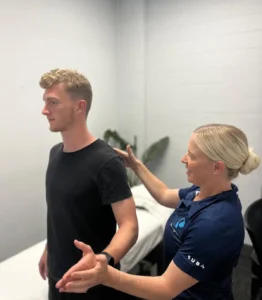 If you’re experiencing ongoing shoulder pain, it’s important to check in with a physiotherapist. Our physiotherapy team at Complete Physio Richmond will assess your shoulder, help identify contributing factors and guide you through a personalised treatment plan.
Because RCRSP is largely a load-related condition, treatment focuses on managing activity levels and gradually building the strength and capacity of the shoulder. This may involve temporarily modifying painful activities while progressively strengthening the rotator cuff and surrounding muscles. With the right approach, most people improve without the need for scans, injections, or surgery.
If shoulder pain has been affecting your daily activities, work, or exercise, booking an appointment with Indi or one of our other highly trained clinicians can help you return to movement with confidence and comfort.
Prefer Complete Physio Richmond on Google
Add Complete Physio Richmond as a Preferred Source on Google to see more of our latest physiotherapy insights in Search.