
What is dry needling?
Let’s take a closer look at a treatment we use at Complete Physio in Richmond – dry
needling.
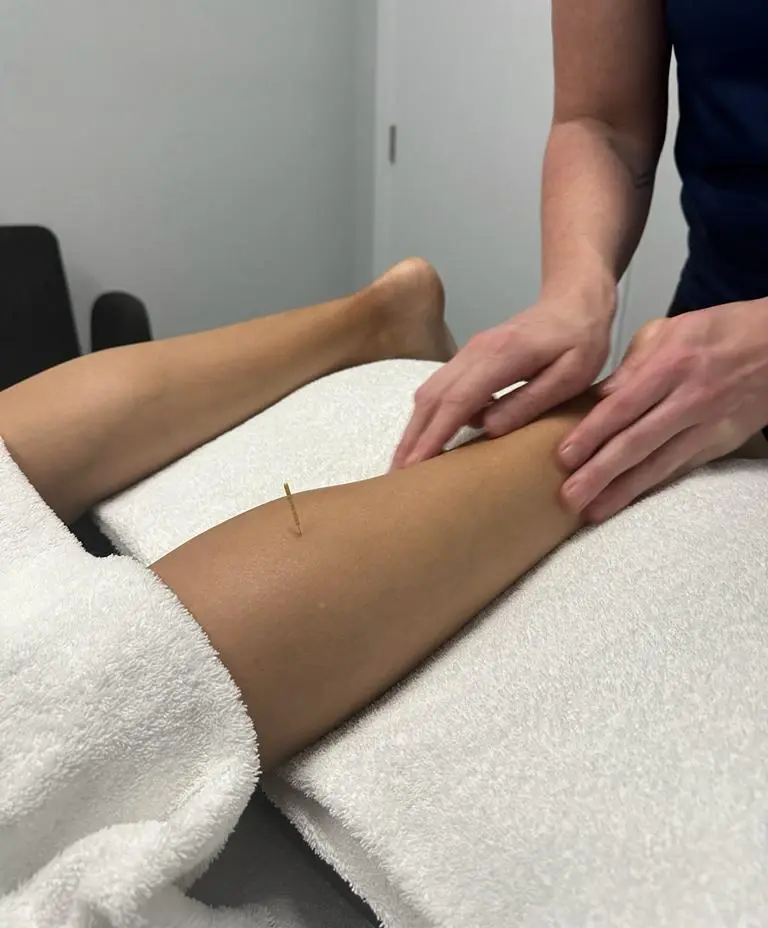 Dry needling is a therapeutic treatment that uses thin, sterile, monofilament needles inserted into myofascial trigger points to help decrease pain and improve function in people with musculoskeletal pain or injury.Put more simply: it involves inserting a very fine needle into a painful or tight muscle to help relieve tension and reduce symptoms.
Is it the same as acupuncture?
While dry needling might look quite similar to acupuncture at first glance, and uses similar needles, the treatment philosophy and intended goals are quite different.
Acupuncture is based on Traditional Chinese Medicine principles, where needles are placed along specific energy channels called ‘meridians’, with the aim of influencing and balancing ‘Qi’ (energy flow) in the body.
Dry needling, on the other hand, is based on modern Western medicine principles. Needles are placed into specific ‘trigger points’ – tight, sensitive bands within a muscle – with the aim of reducing muscle tension, decreasing pain, and improving movement or function. Before placing any needles, the physiotherapist will assess your movement, identify which muscles may be contributing to your pain or dysfunction, and use this assessment to guide treatment.
How does dry needling work?
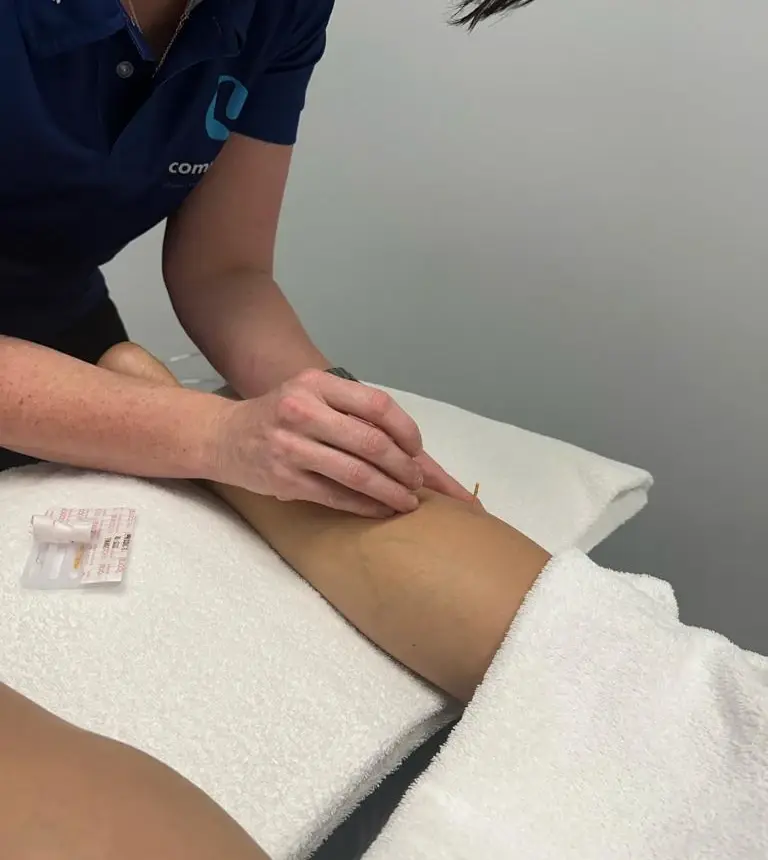
Muscle trigger points can cause pain, limit range of motion, and sometimes reduce strength due to altered muscle activation. In theory, reducing the sensitivity of these trigger points using dry needling may help improve these factors.
Trigger points are thought to develop due to a combination of reduced local blood flow, increased sensitivity within the nervous system, and biochemical changes that activate pain-sensing nerves (called nociceptors). Dry needling may help by increasing local blood flow, reducing sensitivity within the muscle and nervous system, and influencing the chemical environment of the tissue.
One proposed mechanism is the ‘local twitch response’ – a brief reflex contraction of the muscle when the needle is inserted. This response is thought to help reduce muscle tightness and sensitivity.
Additionally, dry needling appears to have effects beyond the local muscle. It may stimulate the release of pain-relieving neurotransmitters within the nervous system, contributing to a broader, centrally mediated pain-relief effect.
How can sticking needles into my muscles help my injury?
Dry needling won’t necessarily “fix” your injury – but it can be very effective for short-term pain relief.
When you’re in pain, you often move differently and may use compensatory strategies that can contribute to ongoing discomfort or dysfunction. We can use dry needling in a similar way to massage or other hands-on therapies – to provide temporary symptom relief. This can help you move more comfortably and improve your movement patterns and neuromuscular control.
From there, we can progress targeted rehabilitation exercises more effectively and with better quality of movement.
So no, it’s not a magic fix that means you can skip your rehab! But it can help you get more out of your rehabilitation program.
What does the evidence say?
A large study called an umbrella review (a big-picture summary that compiles findings from multiple systematic reviews) found that dry needling is effective for short-term pain reduction across various body regions (1). It was more effective than no treatment or placebo, but when compared to other active treatments, overall outcomes were generally similar.
Specifically for athletes, a recent systematic review summarised findings from individual dry needling studies in sporting populations (2). This review concluded that for athletes with injuries or pain, dry needling has significant short-term pain-relieving effects. However, in uninjured athletes, there is currently insufficient evidence to support its use for general recovery or performance enhancement.
What injuries can benefit from dry needling?
Many musculoskeletal injuries that involve muscle tightness or sensitivity may benefit from dry needling as part of a holistic treatment program.
Clinically, we have seen positive outcomes in patients with conditions such as tennis elbow, iliotibial band pain (ITB syndrome), low back pain, and in those recovering from muscle strain injuries such as hamstring, quadriceps, or calf strains.
Ready to find out if dry needling could help you?
If you’d like to know whether dry needling could form part of your treatment plan, speak with one of our physiotherapists at our Richmond clinic. You can book an appointment online, call us.
Find out more about our dry needling services.
References
1. Gattie E, et al. (2022). Dry needling: an umbrella review of systematic reviews. PubMed Central / NIH →
Prefer Complete Physio Richmond on Google
Add Complete Physio Richmond as a Preferred Source on Google to see more of our latest physiotherapy insights in Search.